Voice GPS & Driving Directions
- 4.1
- Rating
- 10.00M
- Installs
- Free
- Price
 Analysis by App-foxy
Choosing a navigation app is less about finding the longest list of features and more about finding the tool that behaves well during an ordinary trip. I look for clear route guidance, useful voice instructions, a manageable interface, and a setup that does not turn a quick drive into a project. Voice GPS & Driving Directions is aimed at that practical need. It is a free Maps & Navigation app from Delta Raza Studio, built around GPS guidance and spoken directions rather than a large collection of extra services.
After spending time with it, I see it as a straightforward option for drivers who want their phone to act like a simple navigator. It is not the kind of app I would choose solely because it has the biggest ecosystem or the most advanced travel tools. Its appeal is narrower and easier to understand: enter a destination, follow the route, and listen for the next instruction. That focus can be useful, but it also means the right choice depends on what you expect from navigation software.
How I would decide whether it fits
I’d use this section to make the choice practical: test the app on a familiar route, then notice whether its voice-led approach feels comfortable enough to become part of your routine. The useful question is not whether it can guide one successful trip, but whether it makes ordinary drives simpler without adding extra setup or distraction.
You May Also Like

 Blood Strike: 2.5 Anniversary
Blood Strike’s Loadouts Turn Every Drop Into a Tactical Gamble
A close look at Blood Strike’s custom loadouts: how fast access to signature weapons reshapes its battle royale rhythm, rewards preparation, and narrows the gap between fights.

 Pandora - Music & Podcasts
Pandora’s Music Is Easy to Start, but Harder to Recover
Pandora’s strength is its low-effort path from a seed to a station. Its weak spot is how much confidence it asks you to place in connection, setup, and quiet recovery.

 8 Ball Pool
 Is Built on Rivalries, Rematches, and Routine
A close look at the rivalries, rematches, shared routines, and unanswered safety questions that turn a quick pool match into a persistent mobile community.

 Samsung Music
’s Quiet Strength Is Playing What You Already Own
Its reach comes less from spectacle than from dependable access to a personal library. That simplicity is both the app’s strongest retention engine and its ceiling.

 AccuWeather: Weather Radar
AccuWeather Review: A Quick, Clear Forecast for Everyday Decisions
For everyday plans, the best forecast is the one you can understand quickly. AccuWeather makes rain timing, radar, and local conditions easy to act on, with a few trade-offs.

 Hill Climb Racing
Why Hill Climb Racing Still Turns Crashes Into One More Run
A tiny car, a bumpy hill and one more upgrade: Hill Climb Racing keeps resurfacing because its simple chaos makes every near-miss feel personal.
More From Our News Desk



Start with the type of trip you actually make
The first question I would ask is whether you mostly need everyday driving directions or a broader travel companion. For commuting, visiting an unfamiliar address, or making a one-off trip across town, a voice-led GPS app can be enough. You may not need restaurant discovery, public transport planning, extensive place reviews, or a tightly connected account ecosystem every time you get behind the wheel.
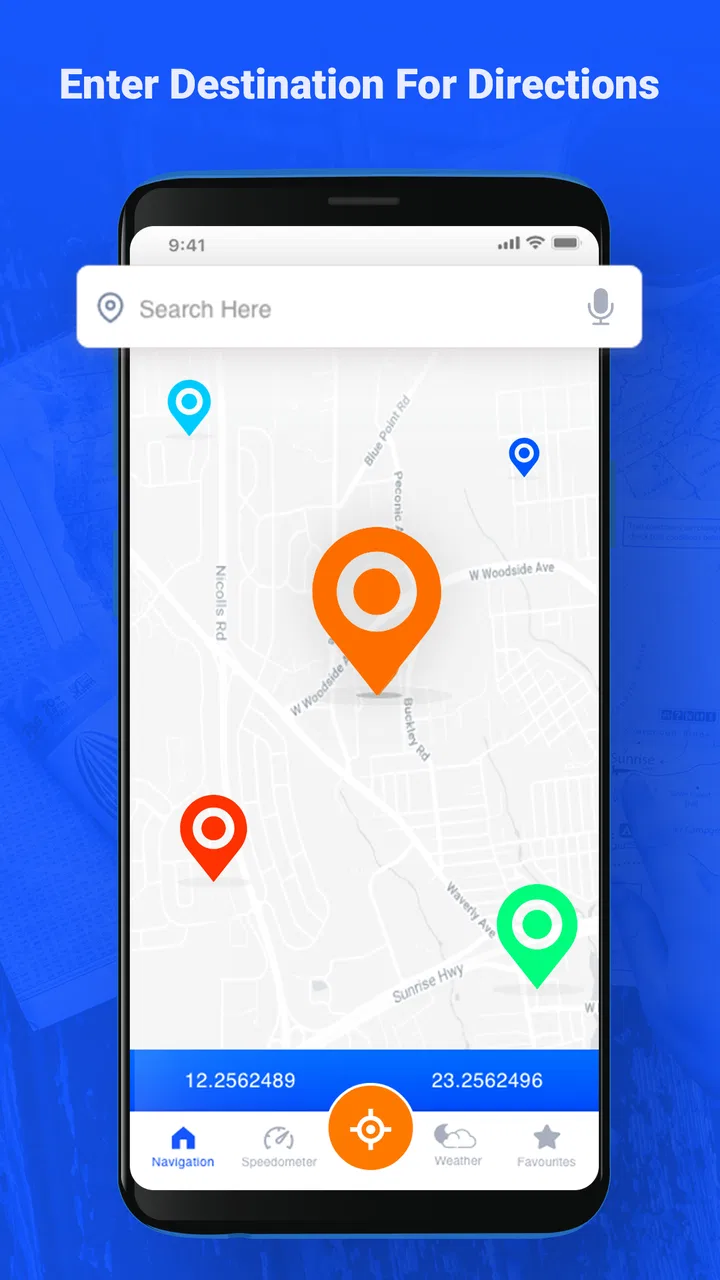
That is where this app makes sense. Its store short description is simply “Voice GPS,” and that gives a fair idea of its personality. The important interaction is listening while driving instead of repeatedly looking down at the screen. I found that approach more comfortable when I had already started moving and wanted navigation to remain in the background.
On the other hand, drivers with complicated daily routes should judge it more carefully. If your routine depends on detailed traffic decisions, frequent stops, multiple transport modes, or a deep history of saved places, a larger navigation platform may be a better match. I would not install this app expecting it to replace every travel tool on my phone.
Think about voice guidance before visual extras
Voice instructions are most useful when they arrive early enough to prepare you for a turn and remain understandable over road noise. In practice, I prefer to set the destination before pulling away, check the general direction once, and then let the spoken prompts do most of the work. That habit reduces the temptation to handle the phone while driving and makes the app feel more like a dedicated navigator.
A useful tip is to treat the map as a confirmation screen rather than the main thing you watch. Before leaving, I look at the route shape and identify the first major turn or road change. If the journey begins in a confusing parking area or a cluster of small streets, that quick preview helps me notice whether I am heading the right way before relying fully on the voice prompts.
This workflow also exposes a trade-off. A voice-first app is convenient when the route is familiar or reasonably simple, but spoken guidance cannot always explain the context that a larger map service may show around a destination. I still check the final approach when arriving at a shopping area, office complex, or unfamiliar neighborhood, because the last few minutes can be more confusing than the main drive.
Check the practical details before installing
Voice GPS & Driving Directions is free to download, carries an Everyone content rating, and works on Android devices starting with version 6.0. That makes it approachable for people using older phones who do not want to replace a device just to try a navigation app. The current version is 3.4.6, so I would still keep the app updated through the normal store process to benefit from its latest maintenance.
The app has reached over five million installs, with an average rating of 4.2 from around fifteen thousand ratings and roughly two thousand reviews. I do not treat those figures as proof that every driver will have the same experience, but they do suggest that the app has found a substantial audience beyond a tiny experiment. For me, the more important point is that its basic purpose is easy to understand before committing to a new navigation habit.
There are in-app purchases ranging from $1.99 to $19.99 per item. Since the core app is free, I would install it first and test the complete driving routine I care about before paying for anything. A purchase can make sense only if it addresses a feature I genuinely use; paying in advance for extras I may never need defeats the main advantage of choosing a simple free navigator.
Where the focused design works best
The strongest part of the experience is its directness. I do not approach it as a travel planner or a social map. I approach it as a way to get spoken route instructions on my phone. That limited expectation is a strength because it keeps the decision simple: if you need directions, you can try it without an upfront price barrier.
I also like the possibility of using it as a secondary navigation option. Many people keep one familiar map service for searching and planning, then use a separate lightweight tool when they want a less crowded driving screen. Voice GPS & Driving Directions can fill that role for someone who prefers to separate “finding a place” from “following a route.” It is a small but useful distinction, especially when the main map app has become busy with information unrelated to the drive.
Another practical use is helping a passenger prepare the route while the driver concentrates on the road. The passenger can handle the destination entry and initial route check, leaving the driver to follow the spoken prompts. I would still make sure the route is understood before moving, but this division of tasks can make an unfamiliar trip less stressful than trying to operate everything alone.
Small habits that improve the experience
First, I recommend testing the voice guidance while parked before depending on it in traffic. This is not just about learning the controls. It lets you discover whether the speaking volume is suitable for your car, whether your phone is connected to the audio setup you intend to use, and whether the instructions feel easy to follow in your normal driving position.
Second, enter the destination carefully and pause before starting. A navigation app is only as useful as the destination you choose. Addresses with several nearby entrances, large sites, or similarly named streets deserve a quick visual check. I would rather spend an extra moment confirming the place than begin a route that ends at the wrong side of a property.
Third, keep a backup plan for situations where the route becomes unclear. That does not mean carrying a printed map for every trip. It means knowing the destination area, noticing major roads, and avoiding the assumption that a voice instruction alone will solve every last-turn problem. This is especially helpful when road layouts change or when the final destination has several access points.
What alternatives do better
The usual alternatives in this category often compete through breadth. A full-featured map platform may combine driving directions with business listings, reviews, saved locations, transit information, walking routes, traffic context, and a familiar account system. A dedicated navigation product may emphasize route customization, richer driving alerts, or more detailed planning. I am not assigning those alternatives specific capabilities here; the point is that they generally target a wider range of travel decisions than this focused app.
That broader approach is better when navigation is only one part of your day. If I am planning a trip with several stops, comparing places to eat, checking transport options, and saving locations for later, I would rather use a mature all-purpose map service. It reduces the need to move between several apps and gives me one place to organize the journey.
A different alternative may also suit drivers who want extensive route control. If you regularly adjust stops, compare several route choices, or need detailed information before setting off, a more advanced navigation tool could save time in the long run. Voice GPS & Driving Directions is easier to consider when the task is simply getting from the current location to a destination with spoken help.
Privacy preferences can also affect the decision, but I would not choose an app based on assumptions about permissions or data handling. Instead, I would read the current store disclosures and device prompts during installation. That is a sensible step for any navigation app because GPS use is central to the experience, and personal comfort with location-based services varies from one person to another.
A realistic everyday test
Imagine leaving work for a friend’s home in a part of town I rarely visit. Before starting the car, I would open the app, enter the destination, review the first part of the route, and make sure the spoken guidance is audible. Once on the road, I would keep the phone mounted and listen for the next instruction rather than holding it. At a major turn, I would glance briefly only when safe, then return my attention to driving.
For that scenario, the app’s focused purpose is enough. I do not need to build a full itinerary or research the neighborhood while moving. If I miss a turn, I would allow the route to update or stop safely to reassess rather than trying to correct the mistake through hurried screen taps. The app helps most when I use it as a calm guide, not as a substitute for basic awareness.
Now change the scenario to a day with several appointments, uncertain parking, and a need to compare nearby businesses. My preference would change. I would probably begin with a broader map service because the planning work matters as much as the driving instructions. This comparison is important: Voice GPS & Driving Directions is not necessarily weaker for being focused, but its focus makes it less suitable for a trip that involves many decisions beyond following a route.
The cost of changing navigation habits
Switching navigation apps is not expensive in the usual sense when the app itself is free, but there is still a learning cost. I need to become familiar with where destinations are entered, how routes begin, how voice instructions behave, and what I should do when the road does not match my expectations. That learning is manageable here because the app’s purpose is clear, yet I would still test it on a short, low-pressure journey first.
I would not make my first test a long drive through an unfamiliar city at night. A better approach is to use it on a route I already know. That lets me judge the timing and clarity of the guidance without worrying about the destination. After that, I would try a moderately unfamiliar trip and see whether the app fits my attention style.
The purchase model adds another reason to delay commitment. Because optional items cost between $1.99 and $19.99, I would identify the exact benefit before buying. If the free experience already covers my normal trips, there is no reason to spend simply because an upgrade is available. Conversely, if a paid item solves a repeated problem, I would evaluate that purchase against the cost and convenience of moving to a different navigation app entirely.
There is also a mental switching cost when leaving a familiar map service. I may lose the convenience of an established search history or a routine built around one app. For that reason, I see this product as especially sensible alongside an existing map tool rather than as an automatic replacement. It can handle the driving-focused part while another app remains useful for broader planning.
Who should choose it
I would recommend Voice GPS & Driving Directions to someone who wants a free starting point for spoken driving directions, uses an Android phone that meets the Android 6.0 requirement, and prefers a straightforward navigation task. It is also worth trying for drivers who find large map apps distracting or unnecessarily busy during ordinary trips.
It may be a good fit for a family member who wants basic GPS assistance without learning a large travel platform. The Everyone rating makes it broadly approachable, although I would still help a less confident driver set up the route and phone position before the first independent trip. The best results come from treating the app as one part of safe driving, not as an excuse to interact with the screen in motion.
I would be more cautious recommending it to professional drivers, frequent travelers, or anyone whose work depends on highly detailed route planning. Those users should compare it directly with navigation tools designed around their specific needs. If a missed turn, an incomplete planning workflow, or a lack of broader travel context would create serious inconvenience, a more comprehensive alternative may be worth the extra complexity.
My recommendation after using it
My recommendation is to try it as a focused, no-cost navigation companion rather than assume it must replace your current map app. The combination of GPS guidance and voice instructions is easy to understand, and the free entry point makes a short real-world test sensible. I would begin with familiar routes, confirm that the audio behavior suits my car, and only then use it for more demanding journeys.
What I appreciate most is the clear purpose. Delta Raza Studio has positioned this app around the part of navigation many drivers actually need: getting instructions while keeping attention on the road. What holds it back is the same narrow focus. When I need richer planning, place research, multiple stops, or a more complete travel toolkit, I would choose a broader alternative.
In the end, I would keep Voice GPS & Driving Directions in mind for simple driving tasks and as a backup option. Its 4.2 average and audience of more than five million installs show that it is not an obscure experiment, but popularity alone should not decide the purchase. Install it, test it safely on a known route, and judge whether its voice-first approach matches the way you drive. For users who value direct guidance over a crowded feature set, this is a practical app worth trying before paying for a more elaborate solution.
FAQs for Voice GPS & Driving Directions
01What is Voice GPS & Driving Directions, and how does it work?
Voice GPS & Driving Directions is a navigation app designed for both Android and iOS devices. It provides real-time GPS navigation with spoken turn-by-turn directions. The app utilizes your device's GPS to determine your location and guide you to your destination, offering features like traffic updates, alternate routes, and points of interest along the way.
02Does Voice GPS & Driving Directions require an internet connection to function?
While Voice GPS & Driving Directions offers offline maps for certain areas, an internet connection is generally required for real-time features like traffic updates and live rerouting. Offline maps need to be downloaded in advance, ensuring you have access to navigation even in areas with limited connectivity.
03Are there any subscription fees or in-app purchases with Voice GPS & Driving Directions?
Voice GPS & Driving Directions is generally free to download, but it may offer in-app purchases for premium features or ad-free experiences. Users can opt for a subscription to access enhanced functionalities like advanced voice commands, exclusive map updates, and additional customization options.
04How does Voice GPS & Driving Directions ensure user privacy and data security?
Voice GPS & Driving Directions prioritizes user privacy by implementing data encryption and adhering to privacy regulations. The app collects minimal data necessary for navigation, and users can manage their data settings within the app. It also regularly updates its privacy policies to align with the latest standards.
05What are some unique features of Voice GPS & Driving Directions that set it apart from other navigation apps?
Voice GPS & Driving Directions stands out with features such as customizable voice commands, real-time traffic alerts, and detailed lane guidance. It also offers integration with smart devices for hands-free navigation, multi-stop route planning, and access to a vast database of points of interest, making it a comprehensive tool for travelers.
Pros
- Intuitive user interface for easy navigation.
- Accurate real-time traffic updates.
- Voice-guided directions reduce distractions.
- Offline maps available for data saving.
- Customizable route preferences.
Cons
- Occasional GPS signal loss in remote areas.
- In-app ads can be intrusive.
- High battery consumption during use.
- Limited language options for voice guidance.
- Requires frequent updates for accuracy.

Voice GPS & Driving Directions
Gallery